


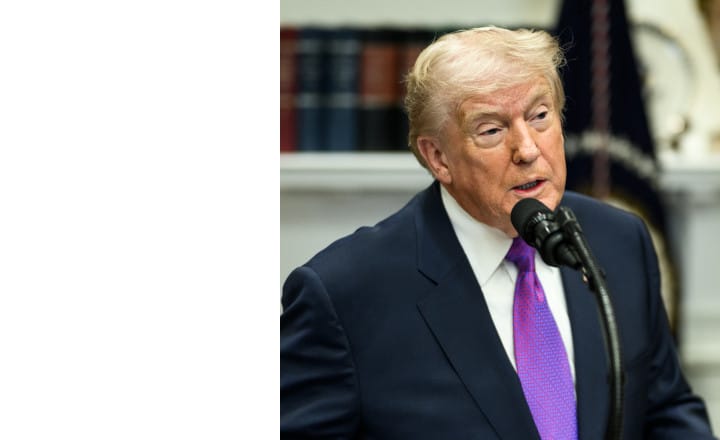
President Trump ignited his critics again, such as Huff Post, when he opined on May 19, “When you have religion, you have less crime. It’s like, ‘Gee, I want to go to heaven, so I’m not going to do this or that.’ Who knows?”
His observation about religion and crime is accurate: there is a mountain of evidence that shows an inverse relationship between religious ideas and practices (religiosity) and crime, meaning the more religious the person is the less likely he is to engage in crime. Trump’s attempt to explain why falls short, but he is on the right track.
My own sociological research on this issue, as evidenced in The Catholic Advantage: How Health, Happiness and Heaven Await the Faithful, found that the Three “B’s,” beliefs, bonds and boundaries, are positively related to the Three “H’s,” health, happiness and heaven.
With regard to crime, those who hold to religious beliefs, have strong bonds and recognize behavioral boundaries, are much less likely to participate in criminal behavior than those who are non-believers, have tenuous bonds with others and fail to observe boundaries.
Duke University psychiatrist Harold G. Koenig is coauthor of the most respected work in the field, Handbook of Religion and Health. His team looked at the research and found that in 91 percent of the studies, there was an inverse relationship between religiosity and delinquency or crime. In a research study released after this project, 100 percent of the studies found a significant difference between religious students and those who were not religious.
We have known of the connection between religion and crime since at least the late nineteenth century when French sociologist Emile Durkheim noted that the strong bonds that religious-minded people form act as a social control mechanism, leading to fewer criminal acts. Moreover, the norms and values associated with religiosity ensure greater compliance with standards of civility.
Durkheim’s thesis has been put to empirical tests by sociologists such as Travis Hirshi and Michael Gottfredson. They found that social control, which religion abets, accounts for less crime. To put it differently, those who have weak ties to social groups are left isolated and are therefore more likely to disregard the rights of others. Lacking moral rules, they allow their base appetites to rule.
Beliefs matter but if they are not accompanied by practice—by attending religious services—their influence is significantly lower. That is because, as University of Texas at San Antonio sociologist John Bartkowski found, those who attend religious services exhibit better social control and social skills.
Critics of Trump’s observation on the relationship between religion and crime know nothing of the sociological research in this field. If they were not reflexively anti-Trump, they would not make comments that make them look patently stupid.