

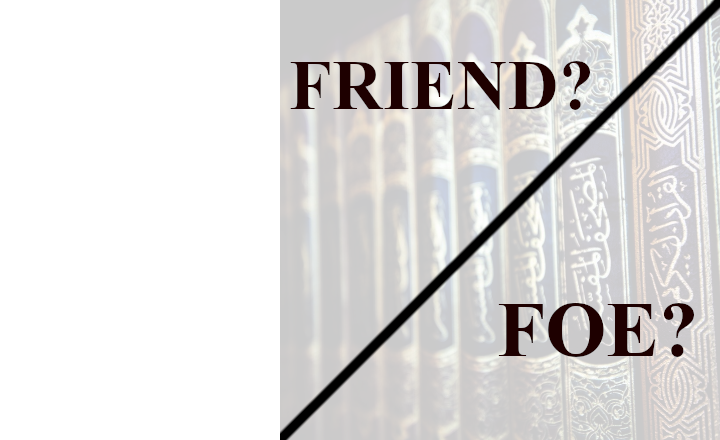
Sharia is the law that is derived from Islamic texts and traditions. Whether it is more of a friend or foe of liberty is disputed, but both sides can’t be right.
On March 20, the New York Times ran an editorial taking aim at President Trump’s “Islamophobia.” Without assessing its merits, what interests the Catholic League is whether its interpretation of Sharia is correct. It defines it as “a set of principles, based on the Quran, that guide life for Muslims, much as biblical precepts guide Christians and Jews.” “Extreme versions” exist, it allows, “including Afghanistan and Iran.”
Agreeing with the Times is the Council on American-Islamic Relations (CAIR), the Muslim civil rights organization.
Sharia, it says, “plays the same role in Islam that canon law plays for Catholics and halacha plays for Jews, a voluntary moral compass, not an alternative legal code.” It goes on to say that “Like other faith communities in the US and elsewhere, we see no inherent conflict between normative values of Islam and the US Constitution and Bill of Rights.”
A week prior to the Times editorial, Rep. Mike Johnson, Speaker of the House, expressed his concern about those who “come to a country and not assimilate but to impose Sharia law.” The problem there, he notes, is that “Sharia law is in conflict with the Constitution.”
Agreeing with Johnson is the European Court of Human Rights.
In 2003, the Grand Chamber ruled that “It is difficult to declare one’s respect for democracy and human rights while at the same time supporting a regime based on sharia, which clearly diverges from Convention values…” Similarly, according to Islamic scholar Robert Spencer, Sharia law is “contrary to America’s founding principles and may violate federal law and the Constitution.”
Islamic texts may not settle the issue, but they do not seem to support the position taken by the Times and CAIR.
The Quran (5:44) declares that failing to “judge by what Allah has revealed” makes one a disbeliever. This would appear to render the U.S. Constitution subordinate to Sharia. Furthermore, the Traveller, a classic Islamic manual of Islamic law, notes that “Jihad is a communal obligation.” At best, this affirms the need for a militaristic struggle; at worst it is a call to arms.
Leaving aside the scholarly debate, what matters in the end is how Sharia is interpreted by those who implement it.
Freedom House annually reports on the state of freedom worldwide, rating every country as Free, Partly Free, or Not Free. Almost all the countries with a Christian majority are rated Free or Partly Free, and all but one with a Muslim majority (Senegal) are rated Not Free or Partly Free. That says it all.
It is undeniably true that the more fully Sharia is implemented, the greater the threat to civil liberties. In other words, in its purist form, Sharia is wholly incompatible with the tenets of the Constitution and the Bill of Rights. But Christianity is not.
The three nations which have full Sharia implementation are Iran, Afghanistan and Saudi Arabia. They enforce Sharia as the sole or primary source of all law, including Islamic text legal punishments (amputation, flogging, stoning) and capital penalties for apostasy, blasphemy, adultery, and theft.
Islamic Republic of Iran
Freedom House:
Iran’s constitution requires all laws to conform to Twelver Shia (Ja’fari) Sharia. Islamic text legal punishments are authorized and regularly applied. Iran’s constitution recognizes only Zoroastrians, Jews, and “Christians by birth” (Armenians, Assyrians, etc.) as protected minorities with limited rights. All others, plus converts, are treated as threats to the Islamic state. Apostasy and blasphemy are punishable by death.
- Iran holds regular elections, but they are not free or fair. The unelected Guardian Council vets and disqualifies candidates, and real power lies with the Supreme Leader and unelected institutions that control the security forces, judiciary, and economy. Media are heavily censored, journalists are arrested or killed, and independent. The judiciary is not independent and serves as a tool of repression: arbitrary arrests, torture, unfair trials, and executions are common.
Afghanistan
Freedom House:
- Since overthrowing the elected republican government in August 2021, the Taliban has ruled Afghanistan as an Islamic Emirate with Sharia as the sole legal framework. The Taliban leader exercises unlimited authority by decree, with no constitution in place. Islamic text legal punishments are enforced nationwide. No non-Islamic public worship is permitted, and apostasy carries a death sentence. Women are almost entirely excluded from public life, including education and employment.
- All political parties and opposition groups are banned. There are no elections, no representative bodies, and no independent media.
The conclusion is obvious: Sharia is the enemy of liberty. We enjoy our freedoms precisely because of our Judeo-Christian heritage.