

The role that the Catholic Church has played historically in securing freedom is not well appreciated. Whether due to ignorance or bias, we need to set the record straight, especially now that we are about to celebrate America’s 250th anniversary.
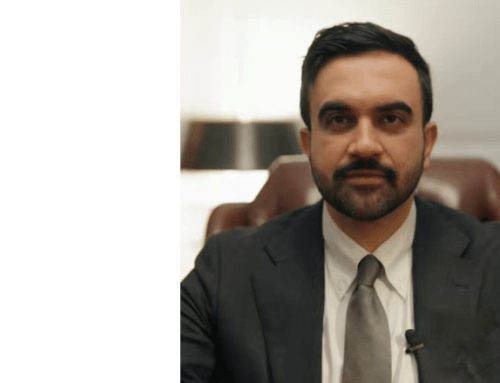
CNN commentator Fareed Zakaria is a secular-minded former Muslim who has a good grasp of history. He says it is wrong to cite Greece as the birthplace of liberty as we know it. That trophy belongs to the Catholic Church.
“The Catholic Church was the first major institution in history that was independent of temporal authority and willing to challenge it. By doing this it cracked the edifice of state power, and in nooks and crannies individual liberty began to grow.” He concludes that “the rise of the Christian Church is, in my view, the first important source of liberty in the West—and hence the world.”
Zakaria is right to call attention to the fact that when liberty was established in the West, it was the first to do so in the world. We can look in vain for the historical unfolding of freedom in Islam, Hinduism and Buddhism. The truth of the matter is that, historically, Eastern civilizations have had no notion of freedom. Indeed there was no word to describe freedom in China and Japan until the nineteenth century.
What made Catholicism special was its understanding of human rights. It has long been a staple of Catholic thought that human rights inhere in every human being as a gift from God. They are not awarded to us; they are natural to us. Made in the image and likeness of Jesus Christ, humans the world over—in every society throughout all of history—possess natural rights. Governments may proclaim certain individual rights, but in Catholic thought governments can never be the origin of such rights. Our rights are inalienable and irrevocable.
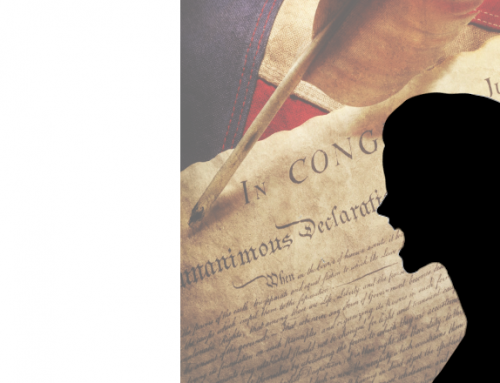
If this sounds familiar, it should: it is the heart and soul of the Declaration of Independence.
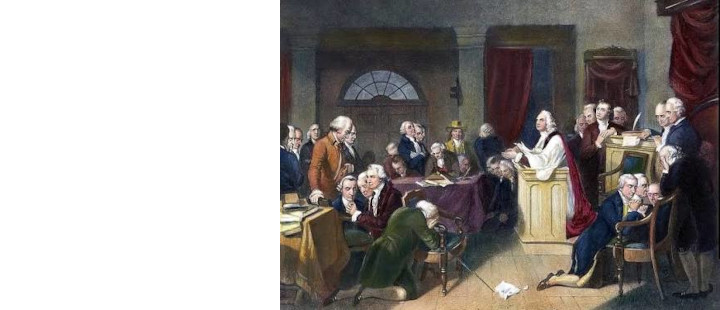
There is a confluence between Catholic thought on the subject of liberty and the thinking of the men who founded America. While it is true that some of the Founders were Deists—men like Washington, Jefferson, Franklin and Paine who doubted the inerrancy of Scripture and the divinity of Jesus—all of those who forged the new social order, whether they were religious or not, understood the need for religion in a free society. They had in mind Christianity, not Taoism.
Jefferson, the author of the Declaration, made numerous references to God in our founding document. He spoke of “the laws of nature and nature’s God”; “the Creator”; “the supreme judge of the world”; and “the protection of Divine Providence.” And, of course, our rights, he said, come from our “Creator,” not from government.
Moreover, Jefferson was hardly the “separation of church and state” zealot that he has been made out to be. As president, he gave $300 to the Kaskaskia Indians to build a Catholic church. Today, secularists fret over students in Catholic schools getting textbooks paid for with public dollars.
The ideas about freedom that guided the Founders have been realized worldwide. The 1948 U.N. Universal Declaration of Human Rights begins by recognizing “the inherent dignity” and “equal and inalienable rights of all members of the human family.” Several popes, both before and after this human rights touchstone, wrote extensively about these issues.
It is for this reason that former U.S. ambassador to the Vatican and Harvard law school professor Mary Ann Glendon has written that “the Church has emerged as, intellectually and institutionally, the single most influential champion of the whole, interconnected, body of principles in the Universal Declaration.
Is it ignorance or bias that explains why so few Americans know about the Church’s proud role in bequeathing to us the freedoms we take for granted? Both. Catholic schools, at all levels, have not done a good job in educating students about this subject, thus their ignorance. On the other hand, not all secularists in education and the media can plead ignorance—some allow their anti-Catholic bias to color their thinking.
The truth is that Catholics should be justly proud of Catholicism’s role in the making of freedom throughout the world, and especially in the United States.