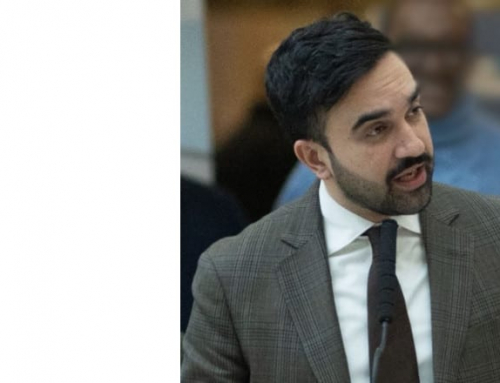



Listening to the experts, the New York City mayoral race is over: Zohran Mamdani is so far ahead in the polls that he is a shoo-in. Not so fast. To be sure, a lot of things have to break just right for Andrew Cuomo to pull an upset, but that is not an impossibility.
Mamdani won the Democratic primary for several reasons. Voters were turned off by the nepotism and appearance of scandal in the administration of Mayor Eric Adams. As governor, Cuomo badly damaged his reputation with his Covid policies and multiple accusations of sexual improprieties. That opened the door to a young and energetic candidate in Mamdani who was able to mobilize some 50,000 young volunteers. But there were other factors at play, too.
The day before the June primary, the weather was predicted to be 102 degrees (it turned out to be 99). “NY Primary Falling on Hottest Day of Heat Wave Could be Bad for Cuomo,” was the headline in the New York Post. The conclusion was warranted: older voters are much more affected by bad weather patterns than young people. By contrast, the weather over the weekend, during the first days of early voting, was great, and it should be mostly fine through election day. So that pro-Mamdani factor is off the table.
Primary voters are typically the most energetic, if not extreme, of all voters, so that favored Mamdani. The primary turnout was relatively good, but in the end only 29.9 percent of registered voters participated. That is a fraction of what we are looking at now. And this time, older voters—who vote at a higher rate than any age demographic—have no reason not to vote.
On the eve of the early voting, one poll scored it 43 percent for Mamdani, 32 percent for Cuomo and 19 percent for Curtis Sliwa. Another had it 40 percent for Mamdani, 32 percent for Cuomo and 25 percent for Sliwa. But the numbers for Sliwa are not likely to hold.
It is well known among psephologists (those who study elections) that social desirability bias is often a factor. This happens when voters are uncomfortable stating their real preference, especially if their choice is seen as controversial. It is not fashionable, in most circles, to brag how great Cuomo is, but that doesn’t mean that some who feel that way won’t vote for him anyway. They will.
There is also the situation where a voter knows his number-one choice doesn’t stand a chance of winning, so he votes for the candidate who is closest to his positions and has a shot at winning. Indeed, a Gallup poll taken this year shows that a majority of Americans (54 percent) who favor a third-party candidate would switch their vote to a major party candidate if they thought that candidate could win.
While it is true that Sliwa is not a third-party candidate, as a Republican in New York City, he may as well be. More to the point, he is not likely to get 19 percent of the vote—many who like him will vote for Cuomo, just to stop Mamdani. That helps Cuomo. Moreover, in the primary, Cuomo won the lower income voter, and with the endorsement of Adams, he is likely to do well with blacks and Hispanics.
The Patriot Polling survey reveals that Cuomo is crushing Mamdani among American-born voters, but Mamdani is crushing Cuomo among foreign-born voters. That favors Cuomo. Foreign-born U.S. citizens are less likely to be registered voters, though that is less true of Asian voters, who favor Mamdani.
Thirty percent of New Yorkers are Catholic and only 29 percent say they are voting for Mamdani; 41 percent are voting for Cuomo. Jews are 16 percent of New Yorkers, and only 30 percent are voting for Mamdani; 63 percent are voting for Cuomo. Orthodox Jews are solidly in the Cuomo camp, and they are 20 percent of the Jewish population.
Historically, in the United States, as well as in Europe, low voter turnout does not mean apathy; rather, it means that voters are relatively content, so it does not matter a great deal who wins. High voter turnout is a sign that citizens are worried (usually in times of turmoil), and that is why they turn out in droves.
“NYC Early Voting Surges Over Weekend with Numbers 5 Times larger than 2021.” That was how the New York Post put it. This bodes well for Cuomo—many New Yorkers, especially Jews, are worried about a Mamdani victory.
More good news for Cuomo: the turnout over the weekend was particularly strong in Manhattan, which nearly equaled the turnout in Brooklyn. This is striking. There are over 1.1 million more residents in Brooklyn than in Manhattan, yet almost as many Manhattan voters turned out as Brooklyn voters! Moreover, Jews make up 21 percent of all Manhattan residents, so the high turnout suggests they voted in big numbers. That favors Cuomo.
The Jewish vote alone cannot push Cuomo over the line. It must be accompanied by voters who prefer Sliwa, but, knowing he can’t win, will hold their nose and vote for Cuomo.
As I said, a lot of things have to break the right way for Cuomo to upset Mamdani, but it could happen. We’ll soon find out.