


America’s most vociferous critics love to trot out horror stories about slavery in the U.S., mostly as a way of saying we need to chill our enthusiasm about our nation’s 250th anniversary. As usual, they’re wrong.
To begin with, slavery is one of the most common institutions in the history of the world. In fact, it began as soon as it became possible—the first slaves were prisoners of war. Slavery has been part of humankind ever since.
Harvard sociologist Orlando Patterson, who has written voluminously about the subject, found that there is not a place on the globe that has not witnessed slavery. The ancient Hebrews, Greeks and Romans not only tolerated slavery, they saw nothing wrong about it. Neither did Aristotle. Similarly, the Chinese and the Japanese were right at home enslaving their people.
In the U.S., free blacks owned black slaves. Indians also owned slaves. While slavery was interracial in the U.S., historically this was unusual: master and slave have typically been of the same racial and ethnic stock.
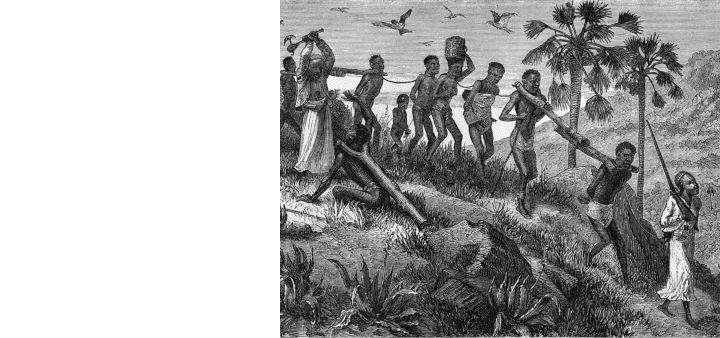
The U.S. outlawed slavery in the 1860s. It was outlawed in Africa in the 1980s. Regrettably, it still exists today in some African countries. It is an old African institution, one that enriched their warlords. But this is seldom taught in the schools, and as a result people like TV celebrity Don Lemon grow up ignorant of the subject.
In 2022, Lemon invited Hilary Fordwich, an English global consultant, to discuss the need for the English to provide reparations to Africans for the role the English played in the slave trade. He was stunned by her reply.
“If reparations need to be paid,” Fordwich said, “we need to go right back to the beginning of that supply chain and say, who was rounding up their own people and having them handcuffed in cages. That was Africa.”
Fordwich continued by saying it was a Christian Brit, William Wilberforce, who started the abolitionist movement. “In Great Britain, they abolished slavery. Two thousands naval men died on the high seas trying to stop slavery. Why? Because African kings were rounding up their own people. They had them in cages waiting in the beaches. No one was running into Africa to get them.”
Also left out of discussions on slavery is the enslavement of white people by Africans. It is estimated that between 1530 and 1780, there were between 1 million and 1.5 million white European Christians enslaved by the Muslims of the Barbary Coast. This exceeded the number of Africans enslaved in the U.S. As economist Thomas Sowell wryly said, “Nobody is going to North Africa for reparations, because nobody is going to be fool enough to give it to them.”
At the time of the Founding, there were slave states and free states, and there could not have been a union at that time if abolition had been a condition of forming the new nation. But this did not stop the Framers of the Constitution from setting in motion its eventual demise. Article I, Section 9, provided for the end of the Atlantic slave trade in 1808. Thomas Jefferson made it happen when he signed the statute that year, at the earliest constitutionally allowable date.
This history lesson was apparently never learned by Linda Thomas-Greenfield, U.S. ambassador to the U.N. under President Biden. She said “the original sin of slavery weaved white supremacy into our founding documents and principles.” Wrong. It was our inalienable rights—encoded in the Declaration of Independence—that ultimately abolished slavery in America.
It was up to Lincoln to finish the job. He could not have done so without invoking natural rights and natural law. Lincoln did not care if the people wanted slavery—it was against natural law (i.e., we know in our heart of hearts whether something is inherently wrong) and against natural rights (all of us possess equal rights, rights that are inalienable, and they come from God, not man).
The reason why slavery persisted in other nations, and the reason why it exists today in many nations throughout the world, is because they have no notion of natural law and natural rights. It was the application of these very Catholic concepts that led to slavery’s abolition. This explains why, at the time of the Founding, the only place in the world without slavery was a Christian nation, namely, Great Britain.
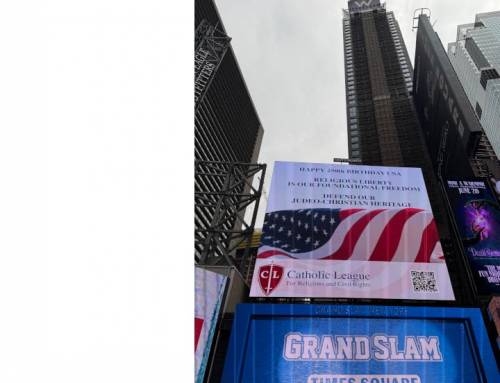
As we celebrate our nation’s birthday, we should indeed discuss our flaws, as well as our heroics. But it is intellectually dishonest to do so in a vacuum.
Once we put our failures in historical perspective, we come to a very different conclusion than the one favored by our carping critics. And once we factor in our stunning achievements, the overall assessment—especially when compared to other nations—is sufficient to make every American proud.