REP. MASSIE’S OFFENSIVE CHRISTMAS CARD

Congressman Thomas Massie’s Christmas card showed a picture of him and six other members of his family each holding a long gun. The card carries the inscription, “Merry Christmas! ps. Santa, please bring ammo.” A photo of the card was posted on Twitter on December 4.

Massie was criticized for doing so, drawing the ire of those who say that this card came on the heels of the Michigan school shooting. On December 6, he stood his ground saying he would not delete the photo.

Rep. Massie’s Christmas card was offensive, but not because we believed he intentionally tried to make a statement relative to what happened in Michigan.

The gun imagery was in bad taste. If this needed to be explained, then he has an even bigger problem. Most importantly, it had absolutely nothing to do with honoring the meaning of Christmas.

Throughout the years, we have objected to the dumbing-down of Christmas, using it as a medium to make statements that are extrinsic to the meaning of Christmas. Whether it was a nativity scene with animals in lieu of the Holy Family, or Christmas cards that were nothing more than a family album, the trend has been to relegate the birth of Jesus to a second-class status. That’s why Massie’s contribution was not welcome.

In 2006, Bill Donohue received a Christmas card from President George W. Bush and the First Lady. When asked by the Washington Post if he objected to its secular tone—”Merry Christmas” was noticeably absent—Donohue said that while he did not like it, he assumed all presidents issued some generic Christmas cards. He was wrong.

Reporter Alan Cooperman told him that every president from FDR to Bush’s father had issued at least one card while in office that said “Merry Christmas.” That changed things. The newspaper quoted Donohue saying, “This clearly demonstrates that the Bush administration has suffered a loss of will and that they have capitulated to the worst elements in our culture.”

Rep. Massie had plenty of other opportunities throughout the year to sport his guns. Christmas should not have been one of them.
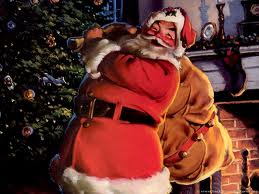


LET’S HAVE A PARTY—BUT NOT A CHRISTMAS ONE

Catholic League president William Donohue today addressed what’s been happening to Christmas parties in the workplace:

“For decades, employees at Time magazine had a Christmas party and looked forward to receiving a Christmas bonus. But starting three years ago, the party was banned and so were the Christmas bonuses. This is not to say that bonuses are no longer given—they are—it’s just that the dreaded ‘C-word’ is no longer associated with them. This is progress.

“The mayor of Somerville, Massachusetts recently apologized for calling the city’s Christmas party a Christmas party. It’s now a Holiday party.

“ProGroup diversity specialists advise that one way around the ‘December Dilemma’ is to ‘keep holidays inclusive and informative.’ So they suggest, ‘try using seasonal themes rather than a holiday one.’ Good idea—holiday themes remind people of Christmas.

“Simma Lieberman Associates bluntly advises, ‘make sure your Holiday party isn’t a Christmas party in disguise.’ Off with the red and green!

“The Tanenbaum Center for Interreligious Understanding is not too understanding of Christmas this year, and that is why it wants a ‘Seasonal’ or ‘Winter’ party and a ‘Seasonal’ or ‘Holiday’ exchange.

“Matt Cherry of the Institute of Humanist Studies also favors ‘Holiday’ parties over Christmas parties and advocates secret ‘Snowflakes’ instead of secret ‘Santas.’

“An AP story says corporations are ‘barring religious music from cubicles’ and are calling their Christmas parties ‘end of the year’ parties.

“If you’re looking for an explanation for all this, consider what Arlene Vernon of HrxInc says: employers need to be ‘sensitive to the fact that holidays don’t make everyone happy.’ If she had any guts, she’d advocate banning Christmas altogether, but that may affect her profits.”


CHRISTMAS MOVIES TO AVOID

Catholic League president Bill Donohue comments on Christmas movies that would be good to avoid:

Most Christmas movies are endearing, if somewhat simple, but hardly a year goes by without some studio offering some really slimy fare. This year is no exception.

Playing off of “Silent Night,” Universal Pictures is bringing out “Violent Night” on December 2. The plot involves Santa Claus seeking to rescue a family from mercenaries. Santa is anything but gentle—he is a master of violence. According to one reviewer, the movie contains “constant harsh but bloodless violence, including gunplay, explosions, and torture, some sexual humor, a few uses of profanity…and crass language.”

The movie’s director, Tommy Wirkola, previously directed “Hansel and Gretel: Witch Hunters,” a 2013 film which was slammed for its “pervasive gory violence.” Pat Casey and Josh Miller, the script writers, have a history of dealing with violence and Christmas. They were responsible for the 2016 miniseries, “12 Deadly Days,” which centered on a cursed California town in the 12 days leading up to Christmas.

“Violent Night” is featured on Twitter, replete with violent adaptations of traditional Christmas sayings. These include: “Time for some seasons’ beatings”; “Bruises to all, and to all a good night!”; “Merry F*cking Christmas” (a Christmas tree emoji is used in place of the asterisk).

A week later, on December 9, “Christmas Bloody Christmas” debuts, streaming on Shudder (a horror streaming service owned by AMC networks). Rated “R,” the movie features a robot toy Santa that goes on a killing rampage on Christmas Eve. According to one reviewer, the film features “a backdrop of drugs, sex, metal, and violence,” including “a blood splattered battle for survival against the ruthless Saint Nick himself.”

“The Killing Tree” is another “R” rated horror movie. It was released November 1 on Amazon Prime Video & DVD. The plot involves “a scorned widow [who] casts an ancient spell to resurrect her executed husband. However, the spell goes wrong, the husband is brought back as an evil Christmas tree, hell-bent on getting revenge on the one who caused his execution.”

This movie is noted for its bloody scenes, including “bloody splatters on the camera and mauled visitors.” The film’s tagline is, “Deck the Halls with blood!”

These flicks will not garner a big audience, but they will feed the sick needs of mostly demented men who get their kicks out of such fare. The obsession with violence at Christmastime tells us a great deal about the mentality of those behind these movies. They really have a hard time dealing with the sacred, which is why they stoop to profanities.

Do yourself a favor and watch “A Christmas Carol” one more time.


INVOKING INCLUSIVITY TO NEUTER CHRISTMAS

Catholic League president Bill Donohue comments on attempts to weaken the significance of Christmas:

Many demographic groups have celebratory events, and some even enjoy a holiday to commemorate their special day. In the spirit of diversity, these groups should be allowed to participate in their events without others seeking to crash them in the name of inclusivity.

It’s really a very simple principle. If those not associated with an event are allowed to hijack it—so as to draw attention to their own cause or group—they would effectively neuter its raison d’être.

Those bent on diluting the meaning of Christmas are very good at playing this dishonest game. For example, over the past few decades there has been a push to give equal recognition to Eastern religions in the month of December. Any month could have been chosen, but they chose December for obvious reasons. This kind of contrived competition is intentionally meant to undermine the uniqueness of Christmas.

The latest attempt to subvert Christmas is coming from the LGBT crowd, clearly the most narcissistic element in society. Never satisfied with having days—even months—set aside in recognition for who they are, they have decided to invade Christmas by flashing their drag queens. Their target audience is children.

A controversy emerged last year in Taylor, Texas when drag queens jumped aboard a Pride float dancing and lip syncing to Christmas carols beneath a glittering rainbow arch. After a priest objected, making his case to the ministers who ran the Christmas parade, the Protestant clergy took his side, and changed their rules, saying all floats must “not conflict with traditional and biblical family values.”

The issue didn’t go away this year, tearing the residents apart.

A spokeswoman for the city defended the inclusion of the drag queens saying, “We couldn’t co-sponsor an event that wasn’t open to everybody in the city.” She obviously did not think this through.

The Christmas parade organizers never said that only some people can participate. The only caveat, which is necessitated by the very meaning of the parade, is that everyone respect “traditional and biblical family values.” Gay floats with drag queens are not there to honor these values—they are there to compete with, if not eviscerate, them.

Sometimes an analogy helps to understand what’s at stake.

New York City has a Salute to Israel parade each year. Would it make any sense, given the name of the parade, to allow Palestinian terrorists to march with a banner, “Death to Israel”?

Another supporter of the drag queens in the Christmas parade said she has a message for the ministers: “You don’t get to decide who celebrates Christmas. You are creating an environment of hate and fear, that is what leads men to commit mass murders.”

Leaving aside the deranged remark about mass murderers, the ministers do, in fact, get to decide who celebrates Christmas. It’s their parade.

Who gets to decide who celebrates Gay Pride parades? Those who sponsor them? Or everyone else, including those who want to ban them?

Martin Luther King Day excludes racists. President’s Day includes only presidents, past and present. St. Patrick’s Day honors the patron saint of one country, namely Ireland. At a minimum, Mother’s Day excludes fathers and Father’s Day excludes mothers. Memorial Day excludes the living, and those who did not die for their country.

Labor Day is for workers only. Yom Kippur excludes non-Jews. Columbus Day pays tribute to Columbus. Veteran’s Day excludes those who never served. Hanukkah is not for Christians. Christmas is not for non-Christians. The only two holidays that recognize everyone—without diluting their meaning—are the 4th of July and Thanksgiving (fortunately, America haters usually exclude themselves).

In other words, holidays, and other special days, acknowledge our diversity. That is why those who try to jam celebrations that are extrinsic to these events, in the name of inclusion, need to be defeated. Their intolerance should not be tolerated.


CHRISTMAS FOES ON THE RUN; PUSHBACK IS EVIDENT

There was a time when the Christmas haters were on the offensive, but now the pushback is in full gear. Our side is showing increasing resolve, and becoming more creative, even when we lose a legal battle.

The Catholic League threw down the gauntlet when Oregon’s Hillsboro School District censored Santa—not just Jesus—from any public display. Employees were told not to decorate their doors with religious figures or symbols, even going so far as to ban Santa.

The school district said it was responding to complaints made over the years by school employees saying that Christmas decorations made them feel “uncomfortable.” We decided it was time to make these school officials feel “uncomfortable.”

We bombarded the Portland media with a news release by Bill Donohue that told it like it is. “After telling employees to ‘refrain’ from using Santa to decorate their doors—in the name of being ‘respectful and sensitive to diverse perspectives and beliefs’—school officials then lied to the community, saying, ‘We [are] NOT banning Santa.’ But that is exactly what they did.”

It didn’t take long before Donohue received an apology from the Hillsboro School District, saying it was all a misunderstanding. Santa was back, and “Christmas-related decorations” were allowed to be displayed.

Another victory was notched when a Texas judge overruled a school district that had banned a poster depicting a scene from “A Charlie Brown Christmas.” The Christmas haters said it had a Christian message, and had to be censored.

A Christmas hater in Knightstown, Indiana, filed a federal lawsuit to get town officials to remove a cross from atop their Christmas tree. The victory was marred when townspeople responded by putting crosses everywhere—they adorned businesses, yards, parks—places where crosses were never seen.

The most active Christmas haters this season were the ACLU, Freedom from Religion Foundation (FFRF), American Atheists, and the Satanic Temple. The ACLU filed suit over religious symbols on public property; FFRF erected anti-Christmas displays next to nativity scenes; American Atheists paid for billboards mocking Christmas; and the Satanists placed  their symbols on public grounds.

“Trees of Diversity” were exhibited in parts of Utah, Marquette University would not allow a Christmas tree event—it held an “Igniting Hope” tree ceremony—and a “Winter Concert” in Mesa, Arizona censored the singing of “Silent Night.”

These examples show that the Christmas wars are far from over. But compared to where we were a decade ago, there are encouraging signs. The nation is increasingly fed up with political correctness, and that is a very good thing.


BANNING CHRISTMAS IN THE SCHOOLS

Catholic League president Bill Donohue comments on attempts to ban Christmas in the public schools:

There is much ignorance about the state of the constitutional law as it applies to Christmas celebrations in the public schools. To cut to the quick—they are permitted.

A Christmas play by the Minden Junior Service League, performed at Minden High School in Webster Parish, Louisiana, was recently the source of much controversy. Two of the 35 minutes of the play discussed Jesus, and some objected, including the Webster Parish School Board.

The Superintendent Johnny Rowland was sympathetic to those who wanted the play, but insisted that there is a “federal court order [that] clearly spells out what is allowable and what is not.” Despite attempts to censor the play, it was performed anyway, and was greeted with a standing ovation.

Officials at Manchester Elementary School, which is part of the Elkhorn Public Schools in Nebraska, got all ginned up over Christmas and decided to ban displays of Santa Claus, Christmas trees, Christmas songs, and the colors red and green. Candy canes were also banned. Thanks to Liberty Counsel, the decision was reversed and sanity prevailed.

What is permissible at Christmastime in the public schools?

In 1995, Secretary of Education Richard Riley issued a directive on this subject at the behest of President Bill Clinton. Here is the language of how the operative paragraph begins:

Official neutrality regarding religious activity. Teachers and administrators, when acting in those capacities, are representatives of the state and are prohibited by the establishment clause from soliciting or encouraging religious activity, and from participating in such activity with students.”

This first part makes good sense: it is not the business of school officials to lead students in religious activities. But the second part also makes good sense, yet it is frequently ignored.

“Teachers and administrators are also prohibited from discouraging activity because of its religious content, and from soliciting or encouraging anti-religious activity.”

In other words, school officials cannot ban voluntary, student-led religious activity at Christmastime. Students cannot be punished for singing Christmas carols, distributing Christmas cards, wearing red and green, giving Christmas presents, writing Christmas poems, giving speeches paying tribute to Jesus, etc.

No federal court has ever ruled that Christmas must be censored in the public schools. It’s about time the superintendents and their lawyers got up to speed and stopped listening to cultural fascists bent on banning Christmas: they know nothing about the First Amendment provisions regarding freedom of religion and freedom of speech.


CHRISTMAS FOES ADVANCE; OUR SIDE PUSHES BACK

Every December the Catholic League is embroiled in the never-ending war on Christmas, and this past Christmas season was no exception. However, there were two important differences: foes of Christmas changed strategies and our side fought back with vigor.

The usual tactic employed by the enemies of Christmas has been to access the law: they prefer to go directly into federal district court seeking to ban nativity scenes on public property, or to censor Christmas songs from being sung in the schools by threatening legal action. While this gambit is still used, the most popular method this time around was to promote “contrived competition.”

Basically, what this comes down to is an attempt to neuter Christmas by celebrating every conceivable holiday or event that occurs in December. Indeed, it even goes beyond this by heralding every racial, ethnic, religious and cultural group worldwide. The goal, under the rubric of promoting diversity, is to deny the central role that Christmas plays in the life of most Americans every December. It is a scam, and nothing more.

The good news is that our side fought back all over the nation. From the state of Washington where the governor allowed militant atheists to foist their hate speech on the public, to Long Island, New York where a village turned a Christmas tradition into an all-inclusive holiday event, Catholics and Protestants fought back by filing lawsuits, staging protests and withdrawing sponsorship.

None of these assaults on Christmas happened purely because of groups like the ACLU. It happened because millions of Americans, including Christians, have been indoctrinated into thinking that the celebration of Christmas should be a mostly private affair. They have been made to feel defensive about their own holiday.

The willingness to fight back occurred because millions of other Americans have had it with attempts to stymie Christmas. They picked up their cultural cudgels in a way not previously seen, giving hope that this perennial culture-war event may yet be won.

There are still those, mostly in the media, who try to pretend that there isn’t a war on Christmas. But as this issue of Catalyst discloses, it is no myth. Moreover, the violence that takes place—in the form of vandalizing religious statues and trashing church grounds—is testimony to the ferocity of our adversaries.

As always, the media courted a response from the Catholic League, and as always, we didn’t let them down.


PRO-CHRISTMAS FOLKS PUSH BACK

Catholic League president Bill Donohue comments on the status of the War on Christmas this year:

For the past few years, there have been two new developments in the War on Christmas: the good news is that more people are pushing back in villages and municipalities across the nation, demanding that Christmas celebrations proceed as planned; the bad news is that militant atheists are more aggressive than ever. Overall, however, there is evidence that the pro-Christmas side is winning the day.

On the positive front, the residents of Ellwood City, Pennsylvania turned out by the hundreds on December 2 to rally in support of their nativity scene. There is a live nativity scene on city property in Minden, Louisiana, and after some initial resistance, a church handbell group will soon take command of the Springhill library’s courtyard. After a nativity scene was banned for years on the grounds of the Muskingum County Courthouse in Zanesville, Ohio, the county commissioners voted unanimously to put it back. Similarly, Wisconsin reverted back to its display of a Christmas tree at the state capitol. “Keep Christ in Christmas” is the banner that stretches across the street in Pitman, New Jersey, and attempts by atheists to censor it have failed.

On the negative front, a school counselor at an Arkansas elementary school has been told that she must remove her posting of a nativity scene on her billboard; her decoration was permitted for more than 20 years. Tulsa, Oklahoma has long had a Christmas parade, but in recent years it was renamed the Holiday parade.

But just as the people in Rhode Island sang Christmas songs at their secularized “Holiday” event, the people in Tulsa countered with their own Christmas parade. Indeed, we see more examples of the pro-Christmas side not settling for a secular outcome than its obverse. More important, when the anti-Christmas side pushes back, those doing it are activist atheists. When the pro-Christmas side pushes back, it’s a grassroots effort. In short, “Power to the People” never sounded so good.