MICROSOFT’S LGBT CHRISTMAS AD

Bill Donohue comments on Microsoft’s Christmas ad:

Ask any schoolboy what the meaning of Christmas is, and he will say it celebrates the birth of Jesus. Ask the ideologues at Microsoft, and they will say it means whatever their politics dictate. This year it represents an opportunity to exploit Christmas by pushing the LGBT agenda.

Microsoft has released a TV ad, “Art of Harmony,” that is laden with Christmas overtones, yet absent of Christian content. “This holiday season we brought together a group of people who are making a difference in the world,” the ad says. It does not say what holiday is being observed, though we have a hunch it isn’t Kwanzaa; the ad ends by showing a Christmas tree in the background.

As it turns out, this is no ordinary “group of people.” Included is Jazz Jennings, described by Microsoft as “the youngest person to publicly identify herself as transgender, now a national role-model and activist for transgender youth.” No doubt she is—her agents have seen to that. [Little Jazz is not mentioned by name but she is seen speaking before the Human Rights Campaign, a pro-gay and anti-religion organization.]

Zea Bowling also made the cut. Zea is described as “a 7-year old first grader who stood firm in the face of hate during a celebration of the Supreme Court ruling that legalized same-sex marriage.” Such courage for a kid fresh off her tricycle. And such brains: she may not know how to tell time, but she sure knows who the haters are—those who believe marriage is between a man and a woman.

In a scene where a rainbow flag is waved, we receive our marching orders: “People should let people be whoever they want to be.” Are Jazz and Zea’s parents listening?

No one, of course, is shown celebrating Christmas. Nor are there any kids shown standing up to corporate bullies who rip off the Christmas season to make cheap political points.

Anyone who thinks this isn’t a political statement needs to read what the ad agency that created it has to say. “This year has been challenging for many and much of what we hear in the news can be negative. Microsoft wanted to lift people up and remind them that ordinary people can make a difference. The message focuses on the spirit of the holidays, people coming together and celebrating what is good and right with the world—what unites us, instead of what divides us.”

I guess this is open to interpretation, so I’ll offer mine.

Much of what I heard in the news was indeed negative. Hillary’s criminal behavior, her lying, her scheming, and her dancing to Jay Z’s “f**king n***ers” lyrics did not make me happy. But the ordinary people, those adorable “deplorables,” did put a smile on my face, proving that even they can make a difference.

Yes, we do need to “celebrate what is good and right with the world,” which is precisely why so many will be dancing in the streets come January 20. It’s on a Friday, so it’s a sure bet the champagne will be flowing. Keep the Advil handy.

If the bi-coastal elites at Microsoft really believe in diversity, then let them have their LGBT celebrations in June during gay pride month, and leave December to Christians.

Contact Microsoft media relations: [email protected]


ATHEISTS ORGANIZE TO TARGET CHRISTMAS

Every year, the Catholic League comes across stories of atheist groups and their attempts to neuter or eliminate Christmas. The following is a partial list of campaigns orchestrated by such organizations during Christmas 2012.

In Niles, Illinois, the Freedom From Religion Foundation (FFRF) placed a Winter Solstice sign in the Village of Niles Plaza to protest the town’s life-size crèche. It featured the Bill of Rights in a manger surrounded by the Statue of Liberty and three Founding Fathers.

In Ellwood City, Pennsylvania, FFRF pressured the city to not erect its nativity scene that had been on borough property for over 50 years.

In its hometown of Madison, Wisconsin, FFRF placed its “Natural Nativity Scene” in the Wisconsin State Capitol Rotunda to counter the Wisconsin Family Action’s nativity scene in the same location.

Not only did the Arkansas Society of Freethinkers (ASF) ruin the opportunity of elementary-school children to see a production of “A Charlie Brown Christmas,” the group also protested the nativity scene on the grounds of the state capitol in Little Rock. The ASF placed its own sign explaining the science behind the Winter Solstice in response to the crèche.

It wasn’t just organizations that were involved with attempts to neuter Christmas; indeed an atheist in Deerfield Beach, Florida specifically requested to place an “anti-religious display” to counter the nativity and menorah on city property. With help from the local chapter of the ACLU, the man erected a Festivus pole made from 24 stacked beer cans to honor a faux holiday popularized by the sitcom “Seinfeld.”

These angry atheists weren’t confined to the lower 48 states, indeed a public high school in Honolulu, Hawaii canceled its annual Christmas concert due to pressure from the Hawaii Residents for Separation of Church and State. Mitch Kahle, the founder of the group wrote a letter on FFRF letterhead to the Hawaii Department of Education claiming that the school was involved with New Hope Church, because some church members had volunteered to sell tickets and work on the set. What’s worse is that the concert has raised over $200,000 over the past six years for Mercy Ships, a charity that houses American doctors in Africa on medical missions.

These militant atheists will never cease in their quest to eliminate Christmas. These incidents, along with the events in Santa Monica and the American Atheists billboard in Times Square, are clear demonstrations that Christmas is in their crosshairs. They aren’t happy with not celebrating the holiday. No, they want all to adopt their Scrooge-like mentality.


MODEL CHRISTMAS PARADE IN ALABAMA

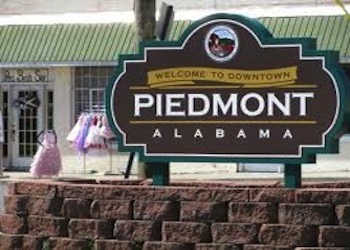
imagesBill Donohue applauds city officials in Piedmont, Alabama:

The theme of this year’s annual Christmas parade in Piedmont, Alabama is “Let’s Keep Christ in Christmas.” Kudos to Mayor Bill Baker and the seven members of the city council for their wisdom and fortitude. Of course, the anti-Christian crowd isn’t happy, as witnessed by the reaction of the Freedom from Religion Foundation (FFRF).

The parade, which will be held Thursday evening, is being protested by FFRF on the grounds that it “alienates non-Christians and others in Piedmont.” It did not name a single person in Piedmont who objected, but even if such a person exists, feeling alienated is not a constitutional basis for violating free speech.

“The sentiment of ‘Keeping Christ in Christmas,'” says the attorney for FFRF, “does not qualify” as a secular celebration. But Christmas is a national holiday, and therefore enjoys a secular status, even if its cultural roots are religious.

Here’s a reality check for FFRF: Religion is the most defining element in any culture, and some of its traditions ineluctably become secularized over time. In this case, the refrain “Let’s Keep Christ in Christmas” is simply a call to honor the meaning of this holiday: No Christ, no Christmas. That, of course, is exactly what bothers FFRF—Jesus Christ!

The Catholic League salutes Mayor Baker and the City Council for making this important cultural statement. We urge all municipalities across the United States to follow suit and adopt the Piedmont model of celebrating Christmas.

To congratulate Mayor Baker, contact: [email protected]


Schools Should Celebrate Christmas

This article by Bill Donohue was originally published by Newsmax on December 10, 2015.

Religious expression in the schools is a perennial issue, but at no time in the school calendar is it more controversial than at Christmas. This year is no exception.

Just recently, the University of Tennessee sought to ban Christmas celebrations, but thanks to a public outcry, which included input from the Catholic League, the draconian guidelines issued by the Office of Diversity and Inclusion were rescinded.

Now the Catholic League is drawing attention to the banning of religious songs at a concert on the campus of Virginia’s James Madison University. A university spokesman says, “JMU is a public university, so because it was a school-sponsored event, the song choice [“Mary Did You Know”] needed to be secular.” He is wrong.

As the Catholic League demonstrated, many public colleges and universities in Virginia have already held concerts this year featuring sacred music. And guess what? There have been no lawsuits and no arrests.

This problem is also commonplace at the elementary and secondary levels. The fact is that public schools, at all levels, are neither required nor prohibited from holding Christmas celebrations, including concerts that feature religious lyrics. But due to the lack of a clear affirmative ruling on this subject, many school officials, worried about a lawsuit, play it safe and opt for a censorial approach.

The lack of clear guidance from the federal courts is what allowed a New Jersey school district to lose in a circuit court ruling in 2009: the Supreme Court refused to hear the case that banned “Silent Night” from being sung at a school concert. However, the same ambiguity allowed a Wisconsin high school in 2013 to reverse its decision banning religious songs: the concert featuring sacred music was held without a problem.

In 1992, President Bill Clinton summoned his secretary of education to work with his attorney general on this issue. He asked them to devise a set of guidelines for school superintendents across the nation on the subject of religious expression in the schools. They did a splendid job.

In 1995, those guidelines were published, and among them was a statement of neutrality. While teachers could not encourage religious activity, they “are also prohibited from discouraging activity because of its religious content, and from soliciting or encouraging anti-religious activity.” Regrettably, those guidelines have too often been ignored.

The closest the Supreme Court has come to settling this matter was in 1980. In Florey v. Sioux Falls, it took a mostly favorable stance on the issue of religious beliefs and practices in the schools. As to be expected, it prohibited the promotion and disparagement of religion by school officials, but it also called for tolerance of religious expression.

As a direct result of this decision, the Sioux Falls School District issued its own guidelines. They included the following: “Music, art, literature and drama having religious themes or basis are permitted as part of the curriculum for school-sponsored activities and programs if presented in a prudent and objective manner and as a traditional part of the cultural and religious heritage of the particular holiday.” In other words, summarily banning “Silent Night” in the schools finds no support in this Supreme Court ruling.

In this decision, the majority opinion leaned on the 1948 ruling in McCollum v. Board of Education. In that decision, Supreme Court Justice Robert Jackson wrote that “Music without sacred music, architecture minus the cathedral, or painting without the scriptural themes would be eccentric and incomplete, even from a secular point of view.”

Such a commonsensical approach to this subject is sorely missing these days. Perhaps that’s because we have too many lawyers on the bench: Justice Jackson was the last Supreme Court justice appointed who did not graduate from law school.

So what should the schools do? They should allow Christmas celebrations, including religious songs at a Christmas concert. It is not only constitutionally acceptable, it makes good common sense: America was founded by Christians, and its heritage is based on the Judeo-Christian ethos.

It must also be said that the much-vaunted commitment to diversity—which is all the rage in the schools—argues persuasively for celebrating this Christian holiday. Those who seek to neuter Christmas celebrations in the name of inclusion do violence to the principle of diversity.

Those who bear an animus against America’s heritage have a right to free speech, but they have no right to prevail in their quest to censor Christmas in the schools.

Dr. William Donohue is the president of and CEO of the Catholic League for Religious and Civil Rights, the nation’s largest Catholic civil rights organization. The publisher of the Catholic League journal, Catalyst, Bill is a former Bradley Resident Scholar at the Heritage Foundation and served for two decades on the board of directors of the National Association of Scholars. The author of six books, two on the ACLU, and the winner of several teaching awards and many awards from the Catholic community, Donohue has appeared on thousands of television and radio shows speaking on civil liberties and social issues. Read more reports from Bill Donohue — Click Here Now.


SCHOOLS SHOULD CELEBRATE CHRISTMAS

The following article by Bill Donohue was recently published by Newsmax.

Religious expression in the schools is a perennial issue, but at no time in the school calendar is it more controversial than at Christmas. This year is no exception.

Just recently, the University of Tennessee sought to ban Christmas celebrations, but thanks to a public outcry, which included input from the Catholic League, the draconian guidelines issued by the Office of Diversity and Inclusion were rescinded.

Now the Catholic League is drawing attention to the banning of religious songs at a concert on the campus of Virginia’s James Madison University. A university spokesman says, “JMU is a public university, so because it was a school-sponsored event, the song choice [“Mary Did You Know”] needed to be secular.” He is wrong.

As the Catholic League demonstrated, many public colleges and universities in Virginia have already held concerts this year featuring sacred music. And guess what? There have been no lawsuits and no arrests.

This problem is also commonplace at the elementary and secondary levels. The fact is that public schools, at all levels, are neither required nor prohibited from holding Christmas celebrations, including concerts that feature religious lyrics. But due to the lack of a clear affirmative ruling on this subject, many school officials, worried about a lawsuit, play it safe and opt for a censorial approach.

The lack of clear guidance from the federal courts is what allowed a New Jersey school district to lose in a circuit court ruling in 2009: the Supreme Court refused to hear the case that banned “Silent Night” from being sung at a school concert. However, the same ambiguity allowed a Wisconsin high school in 2013 to reverse its decision banning religious songs: the concert featuring sacred music was held without a problem.

In 1992, President Bill Clinton summoned his secretary of education to work with his attorney general on this issue. He asked them to devise a set of guidelines for school superintendents across the nation on the subject of religious expression in the schools. They did a splendid job.

In 1995, those guidelines were published, and among them was a statement of neutrality. While teachers could not encourage religious activity, they “are also prohibited from discouraging activity because of its religious content, and from soliciting or encouraging anti-religious activity.” Regrettably, those guidelines have too often been ignored.

The closest the federal courts have come to settling this matter was in 1980. In Florey v. Sioux Falls, a federal appeals court took a mostly favorable stance on the issue of religious beliefs and practices in the schools. As to be expected, it prohibited the promotion and disparagement of religion by school officials, but it also called for tolerance of religious expression.

As a direct result of this decision, the Sioux Falls School District issued its own guidelines. They included the following: “Music, art, literature and drama having religious themes or basis are permitted as part of the curriculum for school-sponsored activities and programs if presented in a prudent and objective manner and as a traditional part of the cultural and religious heritage of the particular holiday.” In other words, summarily banning “Silent Night” in the schools finds no support in this Supreme Court ruling.

In this decision, the majority opinion leaned on the 1948 ruling in McCollum v. Board of Education. In that decision, Supreme Court Justice Robert Jackson wrote that “Music without sacred music, architecture minus the cathedral, or painting without the scriptural themes would be eccentric and incomplete, even from a secular point of view.”

Such a commonsensical approach to this subject is sorely missing these days. Perhaps that’s because we have too many lawyers on the bench: Justice Jackson was the last Supreme Court justice appointed who did not graduate from law school.

So what should the schools do? They should allow Christmas celebrations, including religious songs at a Christmas concert. It is not only constitutionally acceptable, it makes good common sense: America was founded by Christians, and its heritage is based on the Judeo-Christian ethos.

It must also be said that the much-vaunted commitment to diversity—which is all the rage in the schools—argues persuasively for celebrating this Christian holiday. Those who seek to neuter Christmas celebrations in the name of inclusion do violence to the principle of diversity.

Those who bear an animus against America’s heritage have a right to free speech, but they have no right to prevail in their quest to censor Christmas in the schools.


CENTRAL MICHIGAN UNIVERSITY ISSUES WARNINGS ON CHRISTMAS CELEBRATIONS

Catholic League president William Donohue commented today on the way Central Michigan University is handling Christmas celebrations:

“Central Michigan University’s affirmative action office publishes a calendar, available online, that denotes various holidays.  In December, it lists Christmas, Hanukkah, Kwanzaa and Las Posadas.  An asterisk next to Christmas reads, ‘Warning of Holiday Decorations.’

“By clicking on the ‘Warning,’ it is possible to access a document titled, ‘How to Celebrate Christmas Without Offense.’  Before going any further, it should be noted that there is no asterisk next to the other three holidays.  The absence of any ‘Warning’ suggests that those who celebrate Christmas have found it difficult to do so without offending others.  The implication is that Jews and African Americans, as well as Mexican Christians, have been able to celebrate their respective holidays without offending anyone.  Perhaps they should be asked to give sensitivity lessons to white Christians.

“The ‘Warning’ document is a gem.  ‘During the December Holiday season it is important to realize what may be offensive to others within a place of employment.’  Again, those who celebrate the other holidays are spared the lecture about offending others, the implication being that celebrating Christmas enrages non-Christians.  Which, if true, suggests that Jews and Muslims are religious bigots.  This is quite a statement coming from an affirmative action office.

“The document proceeds to instruct Christians on what is permissible: ‘It is inappropriate to decorate things with Santa Claus or reindeer or other ‘Christmas’ decorations.’  So if the Multicultural Gestapo remove Santa, what do they do if they stumble on a nativity scene—smash it with their clubs?  At any event, the document says, ‘Good ideas for decorations during this time are snowflakes, snowpeople, poinsettias to give a feeling of the winter.’  Though this was obviously written by an illiterate—or by a dean—it’s a solid point.  Any school that would allow a snowman is clearly sexist, to say nothing of dissing ‘a feeling of the winter.’”


GAY-THEMED CHRISTMAS EVENTS GALORE

Catholic League president Bill Donohue comments on gay-themed Christmas events:

We’ve never heard of gay-themed Hanukkah events, and we sure never heard of gay-themed Ramadan events, but there is a slew of Christmas ones. Maybe that’s because the boys like us best.

The Ru Paul Drag Race show is being performed at various cities across the nation, hoping to bring some good cheer to those tired of normal celebrations. One of their songs is, “All I Want for Christmas is Nudes,” something all the queens can identify with.

San Francisco is the most homosexual-friendly city in the nation, so it is only natural that it would be home to The Golden Girls Live! The Christmas Episodes. It is said to appeal to aging homosexuals, men who are enthralled at the promise of sex after 40.

Seattle is home to Jingle All the Gay, a Christmas event that pledges to be a “thoroughly queer time.” We’re convinced it is.

In the heartland of America, Twin Cities Pride magazine is boasting of a Miss Richfield “queer-friendly holiday show.” The publication notes that the holiday season is “already pretty queer.” How’s that? “First you fist a turkey, Jesus has two dads, you dress the tree in drag—the list goes on.” No doubt it does.

Lifetime Christmas movies have gotten into the act as well. At the end of one film, Twinkle All the Way, two men kiss each other on the lips. Though they were introduced in the flick early on, there was no indication they were homosexuals. Guess they saved the best for last.

Netflix showed its perverse side by airing The First Temptation of Christ. Aired with English subtitles, this Brazilian short film depicts Jesus in a homosexual relationship. We don’t expect that next month, when we celebrate Martin Luther King Day, Netflix will depict the civil rights leader in a homosexual relationship. Muhammad is also safe.

We did not read about any transgender Christmas events. Maybe in 2020. This could be a transition year.


COSTCO OFFENDS CHRISTIANS

Catholic League president Bill Donohue explains why Costco has offended Christians:

Why do organizations that have a very good family-friendly reputation find it necessary to offend Christians, especially during the Christmas season? As I recently detailed, the Salvation Army did so by adopting the racist ideas imbued in critical race theory. Now Costco has offended Christians by relegating Christmas to a second-class status.

In the December edition of Costco Connection, a publication of Costco Wholesale, the lead article, “A Festive Season,” compares Christmas to Hanukkah and Kwanzaa in a way that is downright insulting.

Written by Tim Talevich, the editorial director of the magazine, he offers a 111-word account of Hanukkah, a 38-word statement about Christmas and a 43-word summary of Kwanzaa. This alone would not mean much, but when we read what he says about the three holidays, it takes on more significance.

What Talevich says about Hanukkah and Kwanzaa is accurate and nicely done. But when it comes to Christmas, he resorts to editorializing, and in a way that is not endearing to Christians. We are told that December 25 is “likely not his [Jesus’] birthday” and that the “early Christians didn’t even celebrate Christmas.” He closes by saying “it’s a popular secular and religious event around the world.”

There is a big difference between these three holidays. Hanukkah is a minor holiday in the Jewish tradition, one that is not mandated by the Torah the way other Jewish holidays are (e.g., Yom Kippur). Christmas is a major holiday for Christians. Kwanzaa was made up out of whole cloth in 1966 by an ex-con who served four years in prison—five years after he founded Kwanzaa—for beating and torturing two women.

It may be that December 25 is not the actual birthday of Jesus. So what? Why be pedantic about it? That’s when it is celebrated. We declared our independence from England on July 2, 1776, yet we celebrate the Declaration on July 4. Moreover, if Talevich is quick to doubt the birth date of Jesus, why did he write with certainty about the Maccabees in the second century B.C.?

The first evidence of celebrating Christmas is around A.D. 200. What does this mean to the average Christian? Nothing. Lots of celebratory events in history evolved over time, for all sorts of reasons. So what is the point that Talevich wants to make?

Any cultural observer worth his salt knows the game that is being played here. In keeping with the cultural mantra about inclusion and diversity—which are clearly political constructs—he seeks to elevate any day in December that could possibly compete with Christmas. That is why he even finds time to mention the winter solstice on December 21, National Ugly Sweater Day on December 17, and Festivus on December 23.

Talevich is not alone in diluting the importance of Christmas. Secularists  can’t cancel it, though many have tried, but they can create faux competition with it. Those who think this is an overreaction need to ask themselves how African Americans would react if we turned February into Diversity Month, celebrating our multicultural heritage. What would this do to the significance of Black History Month?

Talevich ends by saying, “Costco’s role in all this? We’re here with food, gifts and just about anything else you might need to fully celebrate December’s holidays.”

He is being disingenuous. Without Christmas, Costco’s cash registers wouldn’t ring so loudly. The food and gifts they sell are overwhelmingly Christmas gifts, and everyone knows it.

Recognizing all legitimate holidays is a good thing, but treating a major religious holiday as if it were inauthentic is offensive. This wouldn’t matter if Costco had a lousy reputation. And it wouldn’t matter if Talevich were a low-level employee. But neither is true. Which is why it matters.

Contact: [email protected]